

Shotlee LogoShotlee
Blog
Download on theApp Store
Get it onGoogle Play
Skip to main content
GLP-1s & Asthma: How Peptide Therapy Could Improve Metabolic Health & Breathing - Featured image
Weight Loss

GLP-1s & Asthma: How Peptide Therapy Could Improve Metabolic Health & Breathing

Dr. Adrian Vale, MD
Reviewed by Dr. Adrian Vale, MDInternal Medicine · Board-Certified Obesity Medicine
·October 29, 2025·3 min read

On this page

  • The Connection Between Obesity, Asthma, and Metabolic Health
  • GLP-1 Receptor Agonists: A Multifaceted Approach
  • Real-World Impact and Practical Takeaways
  • Tools for Tracking Your Health and Wellness
  • Conclusion: A Promising Future for Metabolic-Respiratory Management
  • How do GLP-1 Agonists Work?

Track Smart

Calculate active GLP-1 levels automatically with Shotlee.

Download →

New research shows that GLP-1 receptor agonists may significantly reduce asthma exacerbations and the need for steroids in obese patients with asthma. This opens up promising new avenues in metabolic health and asthma management.

Share

On this page

  • The Connection Between Obesity, Asthma, and Metabolic Health
  • GLP-1 Receptor Agonists: A Multifaceted Approach
  • Real-World Impact and Practical Takeaways
  • Tools for Tracking Your Health and Wellness
  • Conclusion: A Promising Future for Metabolic-Respiratory Management
  • How do GLP-1 Agonists Work?

GLP-1s & Asthma: How Peptide Therapy Could Improve Metabolic Health & Breathing

Managing asthma can feel like a constant battle, especially if you're also dealing with obesity. What if there was a way to improve both conditions simultaneously? Recent research is shedding light on the potential of GLP-1 receptor agonists, a type of peptide therapy, in not only promoting weight loss but also reducing asthma symptoms. Let's dive in.

The Connection Between Obesity, Asthma, and Metabolic Health

It's no secret that obesity can complicate asthma. Studies reveal that people with obesity and asthma experience more frequent and severe asthma attacks. Inflammation, a common thread in both conditions, plays a significant role.

  • Obesity: Increases airway inflammation, worsening asthma control.
  • Inflammation: Adipose tissue releases inflammatory cytokines that amplify airway inflammation.
  • Metabolic Dysregulation: Insulin resistance and high-fat diets contribute to airway hyperreactivity and decreased lung function.

It’s a vicious cycle. Conventional asthma treatments often focus solely on airway inflammation, but they don't address the underlying metabolic issues. This is where GLP-1 receptor agonists enter the picture.

GLP-1 Receptor Agonists: A Multifaceted Approach

GLP-1 receptor agonists (also called incretin mimetics or peptide therapy) are a class of medications initially developed for type 2 diabetes. However, their benefits extend far beyond blood sugar control. They have demonstrated effectiveness in promoting weight loss and possess anti-inflammatory properties.

How do GLP-1 Agonists Work?

  • Weight Loss: They help you feel fuller, consume fewer calories, and lose weight.
  • Anti-Inflammatory: GLP-1s reduce inflammation throughout the body, including the airways.
  • Improved Metabolic Health: They enhance insulin sensitivity, which is critical for overall health.

Recent research indicates that using GLP-1s, like semaglutide (found in Ozempic and Wegovy), may significantly reduce asthma exacerbations and the need for steroid use in obese patients with asthma. This indicates that targeting both metabolic and inflammatory pathways can lead to improved outcomes.

Precision tracking for your journey

Join thousands using Shotlee to accurately track GLP-1 medications and side effects.

📱 Get the Shotlee App

Track your GLP-1 medications, peptides, and health metrics on the go with our mobile app!

Download on theApp Store
Get it onGoogle Play

Real-World Impact and Practical Takeaways

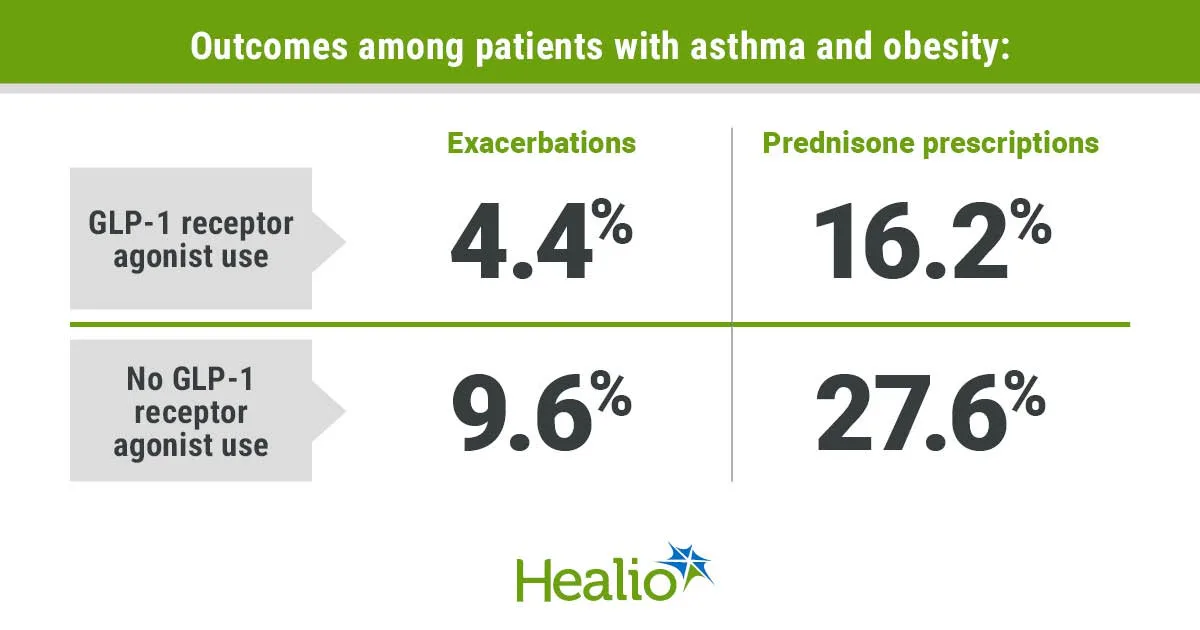
A retrospective study examined patients with asthma and obesity. Those using GLP-1 receptor agonists experienced significantly fewer asthma exacerbations and required fewer prednisone prescriptions compared to those not using these medications. This offers a compelling reason to explore this integrated approach.

Here's what you can do:

  • Talk to Your Doctor: Discuss GLP-1 receptor agonists and their potential benefits if you have both asthma and obesity.
  • Prioritize Weight Management: Weight loss can improve asthma control.
  • Monitor Your Health: Keep track of your symptoms and any changes in your medication needs.

Tools for Tracking Your Health and Wellness

Staying informed about your health metrics is vital. Tools like Shotlee can help track key health indicators, including weight, medication adherence, and changes in symptoms. This comprehensive approach provides valuable insights into how your treatment is working.

Conclusion: A Promising Future for Metabolic-Respiratory Management

The research is encouraging. GLP-1 receptor agonists represent a promising step toward a more integrated approach to managing asthma, especially in patients who also have obesity. By addressing both inflammation and metabolic issues, it could potentially change the way we treat asthma in the future. As research evolves, keep yourself informed and engage with your healthcare providers to find the best course of action for your health and wellness goals.


Source Information

Originally published by Healio.Read the original article →

Read next

Keep exploring

More on Ozempic

Articles covering Ozempic dosing, side effects, and clinical updates.

Ozempic and Male Fertility: Can Semaglutide Boost Sperm Quality?
Health & Wellness

Ozempic and Male Fertility: Can Semaglutide Boost Sperm Quality?

Emerging research indicates that GLP-1 medications, including Ozempic and Mounjaro, may offer unexpected benefits for male reproductive health by addressing underlying metabolic issues.

7 min read
Semaglutide and Male Fertility: New Study Reveals Testosterone Boost
Health & Wellness

Semaglutide and Male Fertility: New Study Reveals Testosterone Boost

Can GLP-1 medications like Ozempic or Wegovy improve male fertility? A new study indicates potential benefits for testosterone and sperm health, but what does this mean for patients?

7 min read
Semaglutide and Blood Pressure Meds: Why Dizziness Risk Is Rising
Health & Wellness

Semaglutide and Blood Pressure Meds: Why Dizziness Risk Is Rising

A new study reveals a potential safety concern when combining GLP-1 medications with blood pressure drugs, highlighting the importance of monitoring hypotensive episodes in select patients.

8 min read

More in Weight Loss

Beyond Ozempic: The Future of Weight Loss & Metabolic Health Innovation
Health & Wellness

Beyond Ozempic: The Future of Weight Loss & Metabolic Health Innovation

The GLP-1 revolution is just the beginning. This article delves into the cutting-edge advancements poised to reshape the future of weight loss and metabolic health, offering insights for patients and observers alike.

7 min read
Beyond Ozempic: A New Pill Targets Fat Metabolism Without Appetite Loss
Health & Wellness

Beyond Ozempic: A New Pill Targets Fat Metabolism Without Appetite Loss

A groundbreaking pill developed by researchers at Karolinska Institutet and Stockholm University offers a new avenue for treating type 2 diabetes and obesity. Unlike injectable GLP-1 agonists, this oral medication targets muscle metabolism to enhance fat burning and improve blood sugar control, aiming to circumvent common side effects.

7 min read
Ozempic & Beyond: Are GLP-1s Shifting America's Obesity Battle?
Health & Wellness

Ozempic & Beyond: Are GLP-1s Shifting America's Obesity Battle?

Once a distant rumor, the idea of widespread obesity in America is now being challenged by a new wave of medications. Discover how GLP-1 drugs are changing the landscape of weight management and what it means for public health.

8 min read
Share this article
  1. Home
  2. Blog
  3. GLP-1s & Asthma: How Peptide Therapy Could Improve Metabolic Health & Breathing
Dr. Adrian Vale, MD — Internal Medicine · Board-Certified Obesity Medicine
Medically reviewed

Dr. Adrian Vale, MD

Internal Medicine · Board-Certified Obesity Medicine

Dr. Adrian Vale is a board-certified internal medicine physician with a clinical focus on obesity medicine and metabolic health. He reviews Shotlee guides and articles on GLP-1 medications, peptide therapy, and weight-management protocols for clinical accuracy.

View all articles reviewed by Dr. Adrian Vale, MD
Shotlee LogoShotlee

Your comprehensive health tracking companion. Track, analyze, and optimize your journey with advanced metrics and community support.

Product

  • Medication Trackers
  • Health Guides
  • Calculators
  • Compare Medications
  • Pricing

Resources

  • Health Blog
  • Support Center

Legal

  • Privacy Policy
  • Terms of Service
  • Community Guidelines
  • Refund Policy

© 2026 Shotlee. All rights reserved.

Made with for the community♥ for the community